

How Do You Choose the Best Used Car Dealership in Hagerstown, MD?
Choosing the best used car dealership requires evaluating transparent pricing without hidden fees, clear vehicle history reporting, a diverse pre-owned inventory, and straightforward financing options. A reputable dealership provides complete title verification, state-inspected inventory, and structured trade-in valuations so you can buy with total confidence. Verifying that every vehicle on the lot has already passed the mandatory Maryland safety inspection ensures you avoid unexpected post-purchase repair costs and immediate administrative delays.
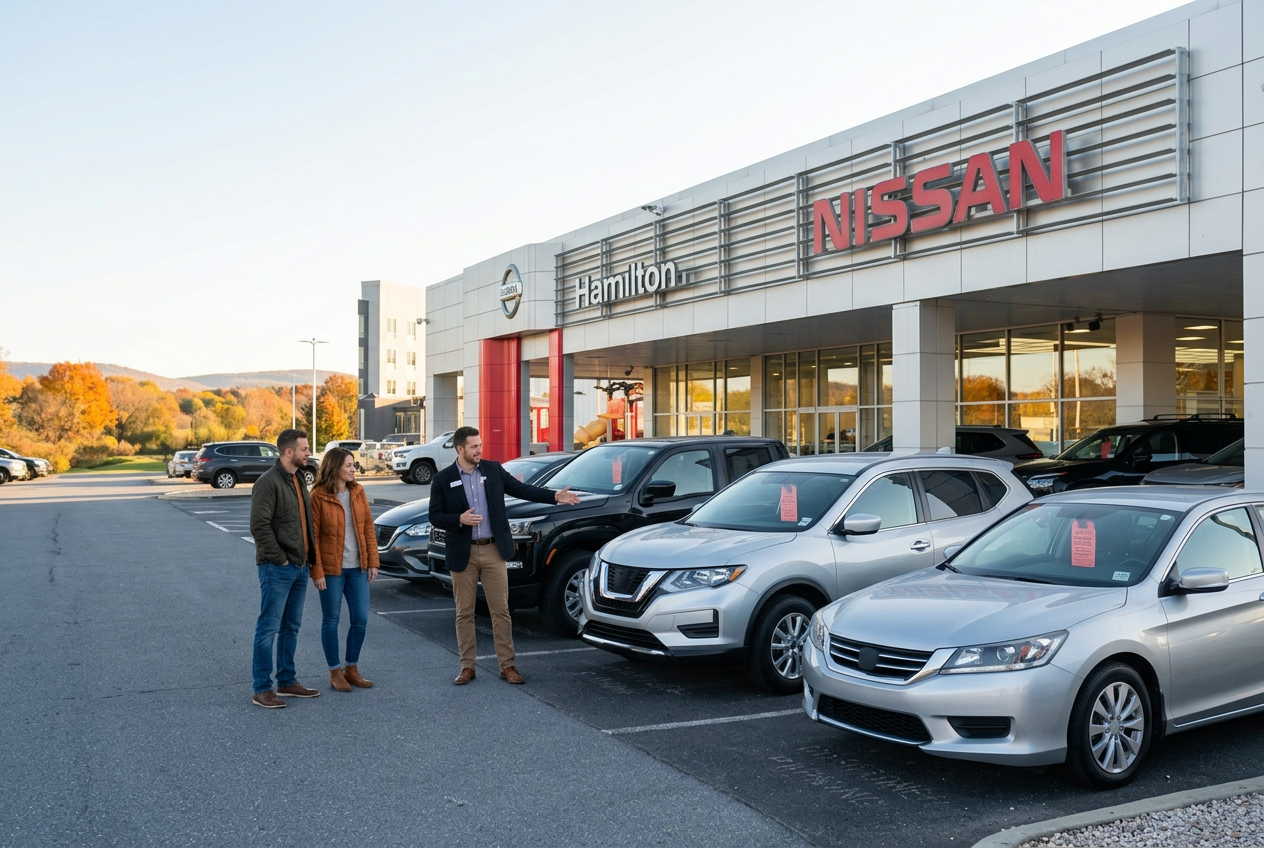
Navigating the pre-owned market in Hagerstown, a regional commercial center situated along major interstate corridors, involves looking beyond the initial window sticker. The ideal dealership simplifies the purchase process by managing official state paperwork, supplying verified vehicle condition documentation, and offering direct access to competitive auto lending programs. Private vehicle sales transfer the burden of state safety inspections, title transfers, and registration logistics entirely onto the buyer. In contrast, an established dealership handles these requirements prior to placing any car, crossover, or truck on the lot.
Inventory selection is equally critical when narrowing down your dealership choices. A robust dealership maintains a comprehensive mix of efficient sedans, versatile crossovers, and heavy-duty trucks, allowing you to compare multiple vehicle classes in a single visit. Working with experienced finance specialists who offer online pre-qualification tools makes Car Shopping Made Easy. To speak directly with our team or schedule a showroom tour, give us a quick call at (301) 733-7222 or get turn-by-turn route details to our showroom address.
Table of Contents
- What Is the Difference Between Buying from a Dealership vs. Private Seller?
- Is a Certified Pre-Owned Vehicle Worth the Extra Cost?
- How Do You Verify Vehicle History Reports and Active Safety Features?
- Where Can You Compare Inventory, Negotiate Prices, and Start Financing?
- What Questions Should Buyers Ask When Navigating Dealership Options?
- Start Your Pre-Owned Vehicle Purchase at Hamilton Nissan Today
What Is the Difference Between Buying from a Dealership vs. Private Seller?
Buying a used vehicle from a licensed dealership guarantees state safety compliance and consumer legal protections, whereas buying from a private seller means acquiring the vehicle strictly as-is with zero seller warranty obligations. Dealerships perform mandatory safety checks, handle all Motor Vehicle Administration titling and tax collection, and offer built-in financing and trade-in options.
| Transaction Category | Licensed Maryland Dealership | Private Seller Transaction |
|---|---|---|
| State Inspection | Completed prior to sale | Buyer responsibility after sale |
| Title & Tag Paperwork | Submitted directly to MVA | Buyer visits MVA in person |
| Consumer Protections | Implied warranty and state regulations | As-is sale with no recourse |
| Payment & Financing | On-site financing & trade-in credit | Cash or personal loan setup |
| Vehicle Cleanliness | Professional reconditioning & detailing | Variable seller condition |
Private sales often require buyers to arrange independent mechanical evaluations at certified repair facilities, coordinate lien releases with third-party banks, and manage title applications manually at state offices. A single undisclosed mechanical issue or missing lien document can turn a seemingly low private price into a costly delay.
Dealership transactions streamline every step of ownership transfer. When you purchase from a franchise dealer, the vehicle has already completed its mandatory inspection covering dozens of critical components, including steering, suspension, brakes, tires, and electrical systems. Additionally, dealerships accept vehicle trade-ins to reduce your overall taxable purchase price. If you are weighing a used vehicle against a new model year vehicle, you can also explore our latest new Nissan inventory to compare technology packages and factory incentives. Value-conscious shoppers planning a vehicle upgrade can easily value their trade-in online to calculate their exact down payment budget ahead of time.
Is a Certified Pre-Owned Vehicle Worth the Extra Cost?
A Certified Pre-Owned vehicle is worth the extra cost because it includes extended manufacturer powertrain coverage, rigorous multi-point mechanical inspection standards, and complimentary roadside assistance that protect you against unexpected repair costs. Certified pre-owned models bridge the gap between standard used cars and brand-new vehicles by combining lower pre-owned depreciation with comprehensive factory-backed warranty protection.
Standard pre-owned cars are priced purely on age, mileage, and market condition, carrying only whatever residual factory coverage remains. A Nissan Certified Pre-Owned model must satisfy strict age and mileage qualification standards before undergoing an exhaustive inspection performed by factory-trained technicians. Any component showing excessive wear is reconditioned or replaced using genuine OEM components.
- Extended Powertrain Coverage: Protection under a 7-year/100,000-mile powertrain limited warranty covering major engine, transmission, and drivetrain components.
- Comprehensive Reconditioning: Rigorous multi-point inspection process ensuring every mechanical system meets strict factory standards.
- Roadside Support: Emergency roadside coverage, including towing, battery jump-starts, and fuel delivery.
- Title Assurance: Verified vehicle history documentation confirming a clean title history free from structural or salvage records.
For commuters driving valley highway routes through Chambersburg, this added coverage provides continuous peace of mind during long daily travel. Certified pre-owned vehicles also qualify for specialized manufacturer financing rates that are frequently lower than standard used car loan rates. To review current options and active inventory, see dealer for current program details. You can begin by exploring our extensive used vehicle inventory or browsing our specialized Certified Pre-Owned Nissan inventory to find the right vehicle for your budget.
How Do You Verify Vehicle History Reports and Active Safety Features?
Verifying a used vehicle requires checking official history reports for reported accidents and title records, followed by a thorough hands-on test drive to test every active safety system. While history reports provide essential operational records, physical testing confirms that sensors, cameras, and driver-assist features function correctly.
Vehicle history reports compile data from law enforcement agencies, insurance providers, and participating service centers. However, history reports only capture incidents that were officially reported. If a previous owner repaired damage out-of-pocket without filing an insurance claim or police report, that incident will not appear on the paper record. Therefore, a clean history report must always be paired with a complete visual and mechanical inspection.
During your operational test drive, test active driver-assist and safety features in real-world driving conditions:
- Backup and Surround Cameras: Shift into reverse to verify display clarity, dynamic trajectory lines, and rear cross-traffic alert warnings.
- Blind Spot Monitoring: Watch for visual indicators in side mirrors when traffic passes in adjacent lanes, ensuring warning lights and audible alerts trigger as designed.
- Forward Collision & Emergency Braking: Verify that distance sensors show clear status indicators on the instrument cluster without warning lights or system error codes.
- Lane Departure Warnings: Observe steering wheel haptic feedback or audible chimes when drifting near road lane markings during highway speeds.
- Parking Sensors: Engage low-speed parking maneuvers to confirm front and rear proximity sensors emit clear proximity alerts.
Advanced safety suites like Nissan Safety Shield 360 utilize integrated radar and camera networks to deliver features such as Automatic Emergency Braking with Pedestrian Detection, Rear Automatic Braking, and Blind Spot Warning. Confirming that all dashboard indicator lights illuminate during ignition and clear properly when the engine starts ensures the vehicle's electronic control modules are fully operational.
Where Can You Compare Inventory, Negotiate Prices, and Start Financing?
Shoppers can compare pre-owned vehicle inventory, negotiate transparent out-of-the-door pricing, and secure competitive financing directly through a franchised dealership's digital portal and physical showroom. Buying through a local dealership ensures that pricing discussions take into account state fee limits, clear trade-in credits, and direct lender financing options.
Used car prices at traditional dealerships are open to negotiation based on current market valuations, vehicle condition, and comparable regional listings. Unlike no-haggle retailers that maintain fixed sticker prices, traditional dealerships allow buyers to structure a purchase around trade-in equity and down payment targets. When evaluating a price quote in Maryland, buyers should understand how state taxes and fees shape the final total cost:
- Maryland Vehicle Excise Tax: Assessed at 6.5% vehicle excise tax on the net purchase price (after non-leased trade-in allowances) or MVA valuation guide. Vehicles seven years old or older carry a tax calculation based on the greater of the sale price or a $640 minimum value.
- State Title Certificate Fee: A mandatory current title fee collected for issuing official Maryland ownership documentation.
- Dealer Processing Charge: State law caps dealer paperwork processing fees at an current dealer processing fee, which covers administrative MVA titling, lien filing, and registration coordination.
Our finance specialists work directly with national banks and local credit unions to secure competitive interest rates for buyers across all credit profiles. When shoppers visit our floor to compare crossovers, our team routinely reviews how monthly payments change when applying trade-in equity versus cash down payments. To fast-track your approval process, buyers can easily apply for financing online from home to lock in pre-approval terms before stepping into the showroom.
What Questions Should Buyers Ask When Navigating Dealership Options?
Q: Does a pre-owned car bought at a Maryland dealership require an immediate state inspection?
No, registered Maryland auto dealers must complete a mandatory Maryland safety inspection before placing any used car on the lot. Private sales require the buyer to pay for and pass an inspection at an authorized station before receiving permanent registration.
Q: How much does a Maryland vehicle safety inspection cost if paid independently?
An independent Maryland safety inspection typically costs based on current rates depending on vehicle size and shop labor rates. When you purchase a pre-owned vehicle from our dealership, this safety inspection is already completed, saving you time and potential repair expense.
Q: What documentation do I need to bring when buying a pre-owned vehicle?
You should bring a valid driver's license, current proof of auto insurance, recent pay stubs or income documentation, and a utility bill for address verification. If you are trading in a vehicle, bring the original title, registration card, and all sets of keys.
Q: Are federal tax credits currently active for used electric vehicle purchases?
Federal tax credits under IRC Section 25E for previously owned clean vehicles ended for vehicles acquired after September 30, 2025. Unless you signed a binding written contract on or before September 30, 2025, present-day pre-owned electric vehicle purchases do not qualify for federal clean vehicle tax credits.
Q: Why should buyers choose a franchised brand dealership for used car shopping?
Franchise brand dealerships offer factory-trained technicians, certified pre-owned programs with extended warranties, clean-title guarantees, and dedicated finance departments. You can discover more by learning about why drivers choose Nissan vehicles and dealership-backed pre-owned programs.
Start Your Pre-Owned Vehicle Purchase at Hamilton Nissan Today
Starting your pre-owned car purchase is straightforward when you explore our up-to-date online inventory, calculate your vehicle trade-in equity, and complete a secure online finance application. Taking these steps online gives you complete clarity on your buying power before scheduling an in-person test drive.
Family-owned and operated in Hagerstown since 1969, Hamilton Nissan is built on trust, reliability, and long-term customer relationships. Our finance team works with regional and national lending partners to secure competitive loan options, ensuring Car Shopping Made Easy for every customer. From efficient sedans to family-ready SUVs equipped with Nissan Safety Shield 360, our pre-owned lineup offers exceptional quality and long-term reliability.
Take the next step toward your next pre-owned car by exploring our inventory online, discovering more about our family-owned dealership, or reaching our sales team directly at (301) 733-7222. You can also get turn-by-turn driving directions to 1929 Dual Hwy, Hagerstown, MD 21740 to test drive your preferred model today.
Keep Your Vehicle Running Strong
Keep your vehicle performing at its best with our service team:
© 2026 Hamilton Nissan. All rights reserved.