

Your Ultimate Checklist to Buying a Reliable Used Car in Hagerstown, MD
When buying a used vehicle from a dealership, you should inspect the comprehensive vehicle history report, verify that the vehicle has passed the mandatory Maryland Safety Inspection, perform a multi-point road test across diverse road conditions, confirm there are no open safety recalls, and carefully review the dealer's mechanical reconditioning documentation alongside warranty coverage terms.
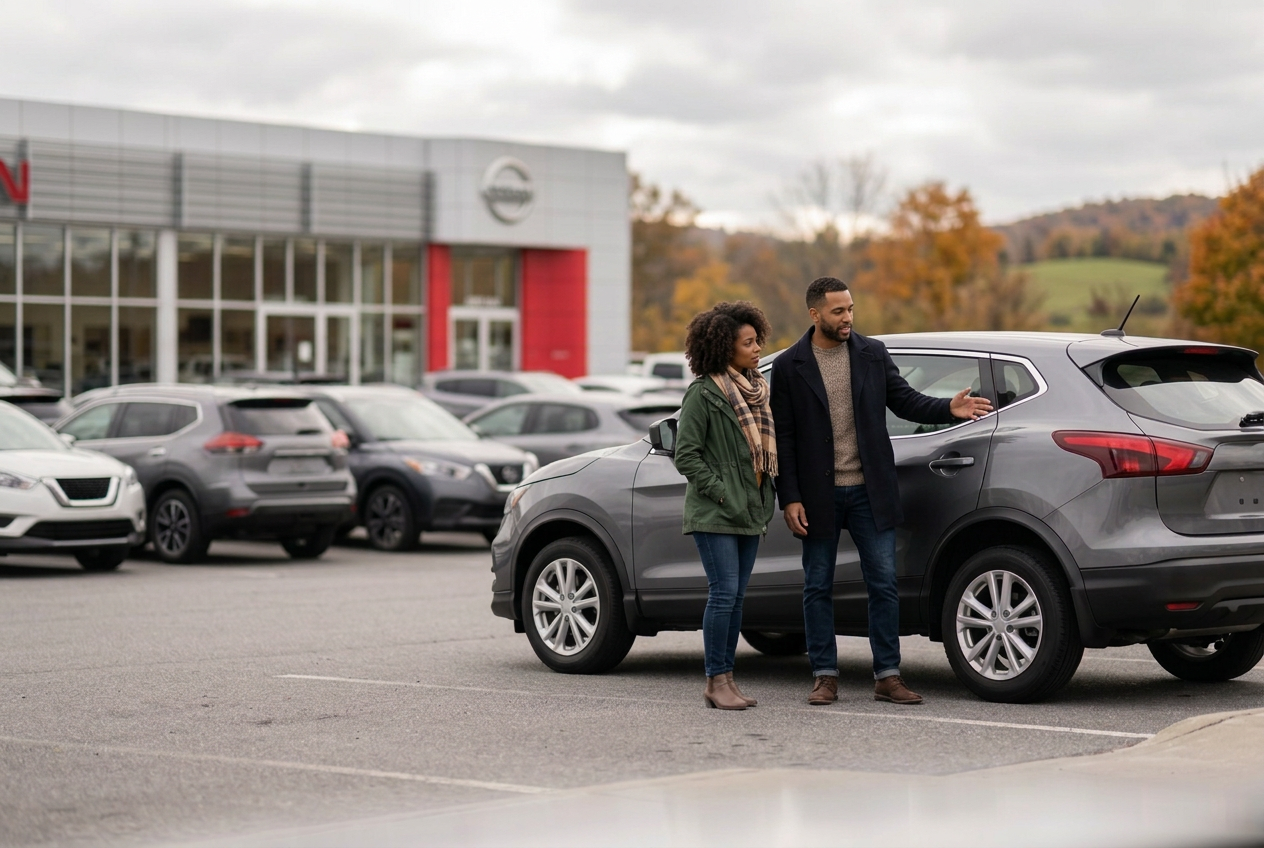
Evaluating a pre-owned vehicle requires a systematic approach to ensure long-term mechanical reliability and strong financial value. A thorough pre-purchase assessment begins before you take the keys for a road test. Requesting a vehicle history report allows you to verify past ownership history, title status, and documented maintenance intervals. It also highlights whether the vehicle has experienced structural damage, airbag deployments, or severe flood impacts.
Once on the lot, conduct a comprehensive exterior and interior physical inspection. Look closely at panel gaps to check for uneven alignment, which can indicate past body repairs. Check tire tread depth and inspect for uneven wear patterns that suggest alignment or suspension issues. Under the hood, check fluid levels and search for visible leaks around gaskets, hoses, and the radiator. Inside the cabin, verify that all power windows, air conditioning controls, infotainment features, and safety systems operate properly.
During the test drive, test the vehicle across both low-speed city streets and higher-speed highway stretches. Listen for unusual engine noises, feel for smooth transmission shifts, and observe brake pedal responsiveness without pulling or vibration. If you plan to finance your purchase, completing an online pre-approval through our financing application tool streamlines the process before you visit our showroom on Dual Highway or reach out by calling (301) 733-7222.
Table of Contents
- Maryland Used Car Laws: Inspections, Taxes, Processing Fees, and Return Policies
- Inclusionary vs. Exclusionary Extended Warranties and Mileage Trade-In Impacts
- AWD vs. 4WD for Winter Driving and Truck Towing vs. Payload Capacities
- Used Toyota Camry vs. Honda Accord: Midsize Sedan Comparison and Nissan Options
- Common Questions About Buying Pre-Owned Vehicles in Hagerstown
- Experience Car Shopping Made Easy at Hamilton Nissan
Maryland Used Car Laws: Inspections, Taxes, Processing Fees, and Return Policies
Maryland state law requires every used vehicle sold to a retail buyer to pass a comprehensive safety inspection, mandates a six percent vehicle excise tax, caps dealer processing fees at $500, and does not provide a statutory cooling-off period for automotive retail purchases.
Understanding state regulations gives buyers complete transparency during the purchasing process. The Maryland Safety Inspection is an extensive 100-plus point evaluation mandated by the Maryland Motor Vehicle Administration. Licensed state inspectors examine critical components including brake pads, steering linkage, suspension components, lighting, exhaust systems, seatbelts, and tire tread depth. A vehicle cannot be legally registered or sold at retail without receiving an official inspection certificate.
Financial obligations in Maryland are standardized across retail vehicle transactions:
- State Vehicle Excise Tax: Maryland assesses a 6% excise tax calculated from the total agreed purchase price or current market book value.
- Dealer Processing Fee: Maryland caps dealer documentation and processing fees at $500, covering paperwork submission, title transfer processing, and electronic registration filing.
- Title Fee: The standard state vehicle title fee is $100, in addition to applicable registration plate fees.
Consumers should also understand statutory rights regarding vehicle returns. Maryland law does not include a mandatory cooling-off period or legal right of cancellation once a buyer signs a purchase contract. Ownership transfers immediately upon contract execution, making it essential to thoroughly review all agreement terms, warranty documents, and vehicle disclosures before finalizing your purchase. Exploring our pre-owned vehicle selection allows you to examine fully inspected inventory with complete documentation.
Inclusionary vs. Exclusionary Extended Warranties and Mileage Trade-In Impacts
An inclusionary extended warranty covers only the specific mechanical components named in the contract, whereas an exclusionary extended warranty covers all vehicle components except for a short list of explicitly excluded items.
Selecting the right vehicle protection package depends on understanding how these coverage structures operate over time. Inclusionary protection plans operate on a listed-component basis. If a failed part—such as an alternator, water pump, or starter motor—is not specifically printed in the policy manual, the repair costs are not covered. These plans are common for higher-mileage vehicles. Exclusionary coverage represents the highest level of protection, often referred to as bumper-to-bumper coverage. Under an exclusionary policy, every mechanical, electrical, and electronic component is covered unless it appears on the exclusion list, which typically consists of routine maintenance items like brake pads, wiper blades, and spark plugs.
| Warranty Type | Coverage Scope | Exclusions | Ideal Vehicle Profile |
|---|---|---|---|
| Inclusionary Warranty | Named components only (e.g., engine, transmission) | Anything not explicitly listed | Higher-mileage pre-owned vehicles |
| Exclusionary Warranty | All vehicle systems covered by default | Wear items (tires, belts, fluids) | Low-mileage late-model vehicles |
Vehicle mileage plays a major role in determining both warranty eligibility and used car trade-in valuation:
- Under 60,000 Miles: Vehicles retain strong market value, experience minimal depreciation hits, and qualify for comprehensive exclusionary warranty coverage.
- 60,000 to 100,000 Miles: Trade-in values adjust moderately, though well-maintained vehicles with full service histories retain solid equity.
- Over 100,000 Miles: Crossing the 100,000-mile mark typically reduces trade-in value by 20% to 35% compared to lower-mileage counterparts, as buyers factor in upcoming maintenance needs.
If you are thinking about trading in your current vehicle, valuing your trade online provides an accurate evaluation based on market conditions in Hagerstown.
AWD vs. 4WD for Winter Driving and Truck Towing vs. Payload Capacities
All-wheel drive delivers continuous, automatic power distribution to wheels with traction for everyday driving, whereas four-wheel drive features driver-selectable, mechanically locked axles designed for severe off-road conditions and heavy snow depth.
Driving across Western Maryland requires selecting the right drivetrain for seasonal weather variations. An All-Wheel Drive (AWD) system relies on electronic sensors and differential units to monitor wheel slip constantly. When the system detects a loss of grip on wet or icy roads, it seamlessly transfers torque between the front and rear axles without driver intervention. This makes AWD ideal for variable road conditions, highway cruising, and light winter snow around Martinsburg. By contrast, a traditional Four-Wheel Drive (4WD) system locks the front and rear driveshafts to rotate at equal speeds. Drivers manually engage 4WD using a selector switch or transfer case lever, providing maximum traction for navigating unplowed driveways, deep mud, or steep mountain terrain.
For truck buyers, understanding the difference between towing capacity and payload capacity prevents vehicle damage and unsafe loading:
- Payload Capacity: Measures the maximum weight a truck can safely carry directly within its cabin and cargo bed, including passengers, tools, and gear.
- Towing Capacity: Measures the total weight a truck can pull behind its rear bumper hitch, including the weight of the trailer and its cargo.
- Tongue Weight: Represents the downward force exerted by a trailer coupler onto the hitch ball, which counts directly against the truck's overall payload limit.
Exceeding payload limits can overload rear suspension springs and strain braking systems, making it essential to match your truck's specifications to your trailering requirements.
Used Toyota Camry vs. Honda Accord: Midsize Sedan Comparison and Nissan Options
The Toyota Camry prioritizes soft ride comfort, long-term component durability, and available all-wheel drive, while the Honda Accord emphasizes athletic steering response, passenger cabin roominess, and rear legroom space.
Comparing these popular midsize sedans highlights distinct design philosophies for daily commuters:
- Toyota Camry: Powered by a standard 2.5-liter 4-cylinder engine paired with an 8-speed automatic transmission, the Camry delivers smooth acceleration and up to 28 mpg city / 39 mpg highway. Available AWD configurations provide added winter traction.
- Honda Accord: Equipped with a standard 1.5-liter turbocharged engine mated to a Continuously Variable Transmission (CVT), the Accord generates 192 hp and 192 lb-ft of torque while offering impressive trunk storage volume.
Drivers evaluating pre-owned sedans should also consider comparable models within our pre-owned sedan inventory, such as the Nissan Altima and Nissan Sentra. The Nissan Altima offers available Intelligent All-Wheel Drive, Zero Gravity front seats designed to reduce fatigue on extended highway drives, and safety features like Nissan Safety Shield 360. The Nissan Sentra delivers efficient performance, making it a popular choice for commuters seeking value and modern connectivity.
Common Questions About Buying Pre-Owned Vehicles in Hagerstown
Q: How long does a pre-owned vehicle credit application take at the dealership?
Completing an online financing application usually takes about ten minutes, and our finance team can help you review current financing options. Bringing your recent pay stubs, proof of residency, and current auto insurance documentation helps finalize loan approval paperwork quickly during your showroom visit.
Q: What documentation should you bring to complete a used vehicle purchase?
To complete a pre-owned vehicle purchase, bring a valid driver's license, your current vehicle insurance card, proof of income, and proof of residency such as a recent utility bill. If you plan to trade in a vehicle, bring the original vehicle title, current registration cards, and all sets of keys.
Q: Can you trade in a vehicle that still has an outstanding loan balance?
Yes, you can trade in a vehicle with an existing loan balance. The dealership contacts your lender to obtain the exact payoff amount. If your trade-in value exceeds your loan balance, the positive equity applies directly toward your purchase down payment; if negative equity exists, it can often be rolled into your new vehicle financing contract.
Q: What is covered under a Certified Pre-Owned Nissan warranty compared to a standard used vehicle?
A Certified Pre-Owned Nissan includes a manufacturer-backed 7-year / 100,000-mile powertrain limited warranty, emergency roadside assistance, and a comprehensive 167-point inspection. Standard used vehicles come with existing manufacturer warranties if applicable, optional dealer protection packages, or state-mandated inspection compliance. Exploring our certified pre-owned Nissan lineup lets you compare options alongside our current new Nissan selection.
Q: How do regional winter road conditions affect undercarriage checks on pre-owned trucks and SUVs?
Winter road salt applied on regional highways can accelerate undercarriage surface corrosion on frame rails, brake lines, and exhaust brackets. Inspecting the vehicle frame, suspension mounting points, and protective skid plates ensures structural components remain solid and free of severe rust.
Experience Car Shopping Made Easy at Hamilton Nissan
Finding the right pre-owned vehicle requires transparent pricing, reconditioned inventory, and a straightforward buying experience backed by dedicated local automotive professionals.
Hamilton Nissan has served drivers across Washington County and the surrounding Tri-State area with reliable vehicles, customer service with a smile, and comprehensive ownership support since 1969. Every qualifying pre-owned vehicle on our lot undergoes an extensive inspection process to ensure mechanical safety and quality. When you purchase from our team, eligible vehicles include benefits through our Travel Together program — featuring a Lifetime Engine Guarantee, lifetime car washes with regular service visits, and Rewards Program enrollment — alongside our Hammy Care Package. Please see dealer for complete details.
Whether you are looking for a fuel-efficient sedan for your daily highway commute, a versatile family crossover with all-weather AWD capability, or a durable pre-owned truck for heavy towing, our team is ready to help you find the right match. We invite you to learn more about our family-owned dealership, browse our up-to-date online inventory, or evaluate your current vehicle trade value online. When you are ready for a test drive, visit our showroom at 1929 Dual Highway in Hagerstown or give our team a call at (301) 733-7222 today.
Keep Your Vehicle Running Strong
Keep your vehicle performing at its best with our service team:
© 2026 Hamilton Nissan. All rights reserved.