

What Cold-Weather Checks Does Nissan Recommend for Tires, Antifreeze, and the 12-Volt Battery?
Nissan recommends checking cold tire pressure monthly against the door-jamb tire and loading label, verifying engine coolant concentration for freeze protection down to -34°F before ambient temperatures drop below 32°F, and testing the 12-volt battery for adequate cold-cranking output. These inspections protect your vehicle from morning starting failures, maintain mechanical grip over frozen asphalt, and guard against internal engine block cracking caused by frozen coolant expansion.
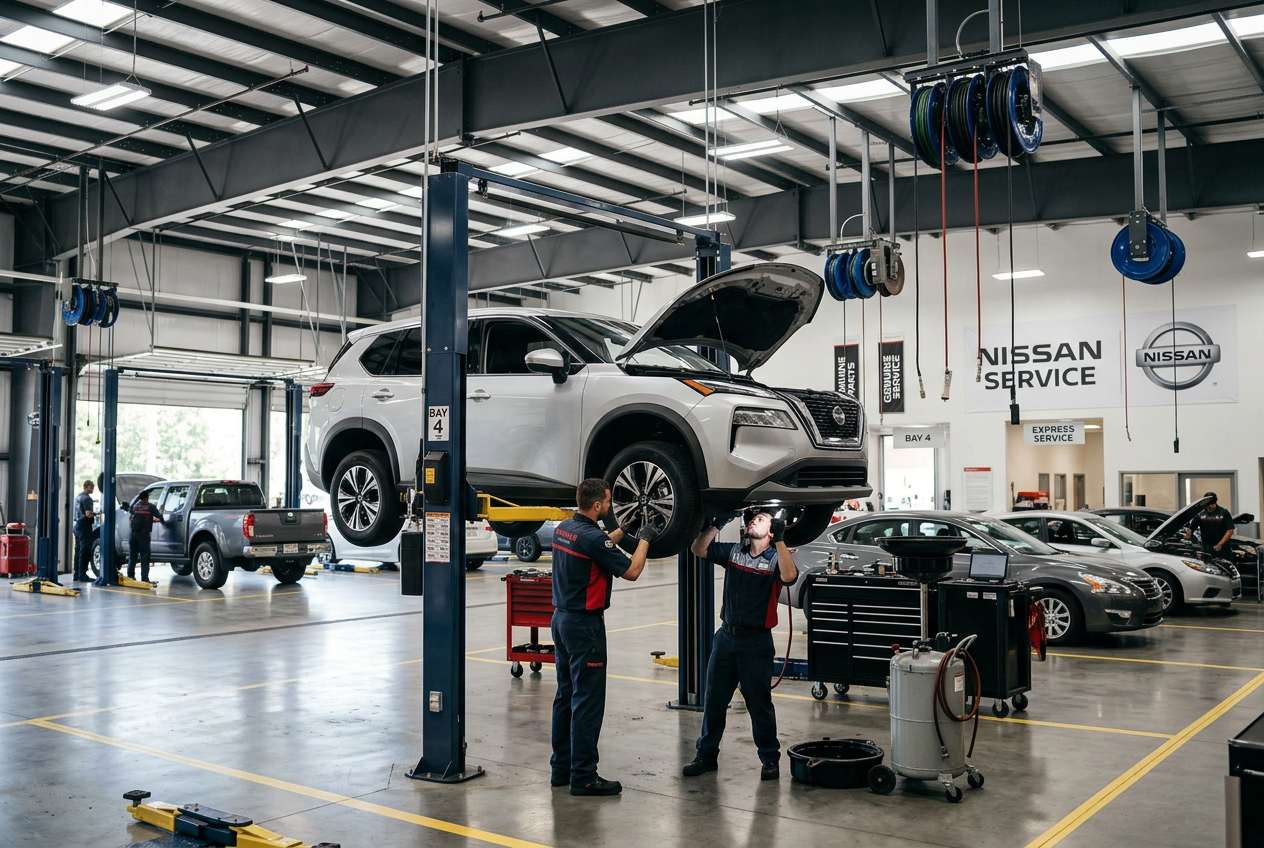
Tire maintenance is critical because air density drops in cold weather, reducing tire pressure by roughly 1 PSI for every 10-degree dip in outside temperature. Nissan defines cold tires as those on a vehicle parked for at least three hours or driven less than one mile at moderate speed. When inflating your tires, always follow the specific pressure specifications stamped on your driver-side door jamb rather than the maximum pressure listed on the tire sidewall. In addition, Nissan guidelines require matching tire size, brand, construction, and tread pattern across all four wheels. Uneven tread depth or mismatched dimensions strain all-wheel drive transfer components and reduce stability during sudden winter braking maneuvers.
Coolant testing prevents catastrophic cooling system failure. Standard engine antifreeze must maintain a 50/50 mixture of genuine Nissan long-life coolant and distilled water to ensure chemical freeze protection down to -34°F. As temperatures dip below the freezing mark of 32°F, diluted coolant can solidify inside the radiator cores, heater core, and water pump housing. Our service team checks both the freeze-point protection level and the pH balance to verify that corrosion inhibitors remain active throughout the winter months.
A healthy 12-volt battery must supply sufficient electrical energy to crank over cold, viscous engine oil. At 32°F, a conventional automotive battery loses between 20 and 35 percent of its cranking strength, with power dropping by up to 50 percent at 0°F. Most modern Nissan four-cylinder and V6 engines require an original-equipment battery rating between 550 and 700 Cold Cranking Amps to achieve crisp winter starts. Nissan warns that an undercharged battery can allow internal electrolyte fluid to freeze, permanently cracking the casing and internal lead plates. To confirm your starting system is ready for winter, visit our service center location or call our service department at (301) 733-7222 to verify your battery condition.
Table of Contents
- How Does Nissan Intelligent All-Wheel Drive Perform on Freezing Winter Roads?
- Are Dedicated Winter Tires Necessary for a Nissan Rogue?
- How Does Nissan Remote Engine Start with Intelligent Climate Control Work in Freezing Weather?
- What Is Covered in a Certified Nissan Multi-Point Winter Inspection?
- Common Cold-Weather Questions for Nissan Drivers
- Prepare Your Nissan for Freezing Temperatures at Hamilton Nissan
How Does Nissan Intelligent All-Wheel Drive Perform on Freezing Winter Roads?
Nissan Intelligent All-Wheel Drive continuously monitors wheel rotation speed, steering angle, yaw rate, and throttle position to redirect up to 50 percent of available engine torque to the rear axle within fractions of a second when wheel slippage occurs. Under normal dry pavement cruising, the system delivers 100 percent of drive torque to the front wheels to preserve fuel economy, engaging the rear wheels only when surface sensors detect low-traction conditions like slush, hard-packed snow, or black ice.
Different models in the lineup utilize specialized drivetrains engineered for cold-weather response:
- Nissan Rogue and Nissan Murano utilize Intelligent All-Wheel Drive paired with an Xtronic continuously variable transmission, seamlessly adjusting torque output between axles without abrupt gear shifts that could break tire contact on slippery curves.
- Nissan Pathfinder features an Intelligent 4x4 system paired with an automatic 9-speed transmission, incorporating selectable drive modes such as Snow mode and Mud/Rut mode to optimize throttle sensitivity, transmission shift mapping, and electronic brake limited-slip engagement.
Mechanical fluid upkeep directly impacts all-wheel drive performance in freezing weather. Viscous fluids inside the transfer case and rear differential gear assemblies thicken during low ambient temperatures. Over time, moisture contamination inside these closed units breaks down lubricant performance. Nissan recommends inspecting and replacing transfer case and differential fluids according to the factory maintenance schedule, typically every 30,000 to 60,000 miles, so moving gears remain shielded from friction when cold.
Drivers navigating the rolling river valley roads and foothill elevations in Jefferson County frequently encounter unpredictable patches of frost on bridges and shaded rural corners. Intelligent AWD assists with directional momentum and forward acceleration on these slick inclines, but it cannot overcome the physical grip thresholds of your rubber. If you have questions regarding drivetrain maintenance or differential fluid changes, you can contact our service team for factory-backed recommendations.
Are Dedicated Winter Tires Necessary for a Nissan Rogue?
Dedicated winter tires are not legally required on a Nissan Rogue, but their specialized hydrophilic tread rubber compounds stay flexible in temperatures below 45°F, delivering up to 35 percent shorter stopping distances on hard-packed snow and black ice compared to standard all-season rubber. While the Rogue offers standard front-wheel drive or available Intelligent All-Wheel Drive to assist with straight-line acceleration, only tire tread delivers lateral cornering grip and emergency stopping power.
All-season tire compounds undergo a physical glass transition as ambient temperatures sink below 45°F, causing the tread rubber to stiffen. This hardening effect prevents the tire from conforming to subtle micro-textures in the pavement. Dedicated winter tires incorporate high concentrations of silica and specialized polymers that remain soft in sub-freezing conditions. They also feature hundreds of micro-grooves, known as sipes, that slice through surface water film and grip packed snow for mechanical traction.
Protecting the drivetrain of your Rogue requires strict attention to tire dimensions and wear patterns:
- Match tire dimensions, load indexes, speed ratings, and tread patterns across all four wheel positions.
- Maintain equal tread depth across both axles, as variations greater than 2/32 of an inch can cause rotational speed mismatches that overheat the all-wheel drive coupling unit.
- Rebalance and rotate tires according to your owner's manual maintenance schedule to ensure even shoulder wear.
Commuters traveling past the higher elevations of Catoctin Mountain Park in Frederick County regularly face sudden winter temperature drops that freeze road surfaces faster than lower elevations. Investing in winter tires through the Nissan Tire Advantage program ensures factory-approved sizing and speed ratings engineered specifically for your crossover. You can easily schedule service online to have our technicians inspect your tire tread depth or mount seasonal rubber before winter storms arrive.
How Does Nissan Remote Engine Start with Intelligent Climate Control Work in Freezing Weather?
Nissan Remote Engine Start with Intelligent Climate Control reads exterior ambient temperatures to automatically activate the interior heater, front window defroster, rear window defogger, and heated steering wheel or heated seats when the vehicle is started remotely in freezing conditions. Operating from up to 195 feet away through the Nissan Intelligent Key fob or via compatible smartphone controls, the system conditions the cabin environment without requiring manual adjustment of the HVAC dials before you leave the vehicle the night before.
When sub-freezing temperatures are detected, the system executes a pre-programmed sequence designed to maximize visibility and thermal comfort:
- The cabin blower directs warmed airflow across the interior windshield surface to melt external frost and prevent internal glass condensation.
- The rear window defogger grid and heated exterior side mirrors activate electric heating elements to clear ice accumulations.
- Heated front seating elements and the heated steering wheel rim begin warming contact touchpoints before you enter the cabin.
- The engine operates for a 10-minute cycle while the doors remain locked and the security system stays armed, shutting down automatically if the vehicle is not driven within that window.
Winter wiper blade care remains an essential maintenance practice even when using automated climate systems. Operating wiper motors while the blades are frozen firmly to the windshield can tear the rubber squeegee material or strip the internal wiper linkage splines. Nissan recommends lifting the wiper arms off the glass before severe winter storms or using a dedicated ice scraper and stiff-bristled brush to clear snow manually before activating the wipers. If winter road salt or sliding ice causes body damage or chipped glass surfaces, our certified collision center provides factory-quality body repairs, windshield replacements, and genuine components to restore your vehicle safely.
What Is Covered in a Certified Nissan Multi-Point Winter Inspection?
A certified Nissan multi-point winter inspection covers every mechanical, hydraulic, and electrical assembly vulnerable to cold-temperature degradation, focusing on battery reserve output, antifreeze chemistry, brake friction wear, and chassis structural bushings. Factory-trained technicians systematically evaluate these assemblies using OEM diagnostic tools to identify marginal parts before sub-freezing weather causes an unexpected roadside failure.
The winter inspection includes the following critical evaluations:
- Electrical and Starting Systems: Technicians test battery state of charge, evaluate cold-cranking amp delivery, test alternator charging output under full electrical load, inspect the starter motor draw, and clean corrosive oxidation from terminal posts and ground cables.
- Cooling and Thermal Management: We measure coolant freeze-point protection with an optical refractometer to confirm safety down to -34°F, check coolant pH levels, pressure-test the cooling system cap and radiator for micro-leaks, and inspect upper and lower radiator hoses for cold embrittlement or swelling.
- Braking Hardware: The inspection measures front and rear brake friction pad lining thickness, checks brake rotors for heat checking or road-salt corrosion banding, evaluates brake fluid boiling point and moisture contamination, and verifies parking brake cable tension.
- Tires and Steering Geometry: Technicians measure tire tread depth across all grooves, balance cold tire inflation pressures according to door-jamb specifications, check for irregular heel-toe tread wear, and inspect tie rods, ball joints, and control arm bushings for cold-weather road shock damage.
- Vision and Lighting Components: We test front and rear windshield wiper blade wiping performance, verify washer fluid pump spray nozzle alignment, top off washer reservoirs with sub-zero rated fluid, and confirm that all exterior LED and halogen forward illumination lamps operate clearly.
Every winter inspection visit includes a detailed vehicle health report that categorizes inspected items by immediate necessity, allowing you to prioritize essential cold-weather repairs.
Common Cold-Weather Questions for Nissan Drivers
Q: Why should you avoid setting the electronic parking brake during prolonged sub-zero freezes?
Nissan advises against setting the parking brake in extreme sub-freezing conditions when temperatures remain below 32°F because moisture trapped on brake cables, calipers, or drums can freeze solid. If the mechanism freezes while applied, the brake friction pads will remain clamped to the rotors, immobilizing the vehicle until the hardware thaws. Instead of engaging the parking brake during deep freezes, park on level ground, shift automatic transmissions firmly into Park, and place sturdy wheel chocks behind the tires if extra rollback prevention is required.
Q: Why does the tire pressure warning light appear on cold winter mornings?
Cold air compresses, causing ambient tire pressure to drop roughly 1 PSI for every 10-degree dip in ambient temperature. A sudden autumn or winter overnight freeze can drop internal tire pressure several pounds per square inch below the recommended threshold, triggering the Tire Pressure Monitoring System indicator on your instrument cluster. While driving warms the tire carcass slightly through friction, you should always adjust tire pressure back to the exact specification listed on your vehicle driver-side door jamb while the tires are cold.
Q: What winter emergency supplies does Nissan recommend keeping in the vehicle?
Nissan recommends carrying a heavy-duty ice scraper and a stiff-bristled brush for clearing snow from windows and wiper blades, along with an extra jug of low-temperature windshield washer fluid rated below freezing. Drivers should also keep heavy-duty jumper cables, a compact LED flashlight, traction mats, a warm blanket, and an accurate tire pressure gauge in the cargo area. Keeping your fuel tank at least half full during freezing weather also prevents condensation from accumulating in the fuel lines.
Q: How does freezing weather affect the lifespan of a 12-volt car battery?
Freezing temperatures slow the internal electrochemical reactions inside a lead-acid battery, reducing total cranking power by roughly 20 to 35 percent at 32°F and up to 50 percent at 0°F. If a battery is already degraded or undercharged, the diluted electrolyte solution inside the cells can physically freeze, permanently cracking the internal plates and case. Testing your battery reserve capacity before winter begins ensures your starting system handles high cold-weather resistance without leaving you stranded.
Q: Can you install tire chains on an all-wheel drive Nissan vehicle?
Nissan allows tire chains on select models, but they must be installed strictly according to the specific instructions in your owner's manual. On the Nissan Pathfinder, for instance, tire chains must only be fitted to the front wheels, even on 4WD configurations, using the correct class of low-profile chain that provides adequate wheel-well clearance. Running improperly sized chains or mounting them on the incorrect axle can cause extensive damage to the suspension, wheel arches, brake lines, and electronic wheel speed sensors.
Prepare Your Nissan for Freezing Temperatures at Hamilton Nissan
Winter driving demands complete confidence in your vehicle's starting reliability, braking precision, and thermal climate performance. From checking high-output battery cold-cranking capacity and flushing engine coolant to mounting factory-approved winter tires, our factory-trained technicians provide the complete maintenance required to protect your vehicle through every winter storm. We use genuine Nissan parts and OEM diagnostic tools to ensure every assembly operates strictly according to factory standards, and we keep you going season after season.
Take advantage of our no-appointment Nissan Express service for fast oil changes and tire pressure checks, or use our digital tools to schedule service online for a comprehensive multi-point winter checkup. If unexpected winter weather leaves you immobilized on the roadway, manufacturer-backed coverage is always close by with Nissan Roadside Assistance: 1-800-225-2476, providing flat tire changes, battery jump-starts, and towing directly to authorized repair facilities.
Our service department is open Monday through Friday from 7:00 AM to 5:30 PM and Saturday from 7:00 AM to 2:00 PM, with bilingual staff available (Se Habla Español). You can learn more about our dedicated team, view our service and parts specials for current maintenance savings (see dealer for details), get turn-by-turn driving directions to 1929 Dual Hwy, Hagerstown, MD 21740, or call us at (301) 733-7222 to prepare your vehicle for the winter road ahead.
A dealer documentation fee of $800 applies to all new and pre-owned vehicle purchases.
Categories:
Service